
Our History
The Lands of Fore


Peace to you, wanderers. I am Brother Ronan, sworn guardian of this sacred ground.
Together we shall wander through the centuries of our storied lands, beginning where the first seeds of faith and wonder were sown, in the year 630 AD. It was in this sacred time that St. Féichín, a humble yet visionary monk, laid the first stones of Fore Abbey....
7th Century AD
St. Féichín Established Fore Abbey
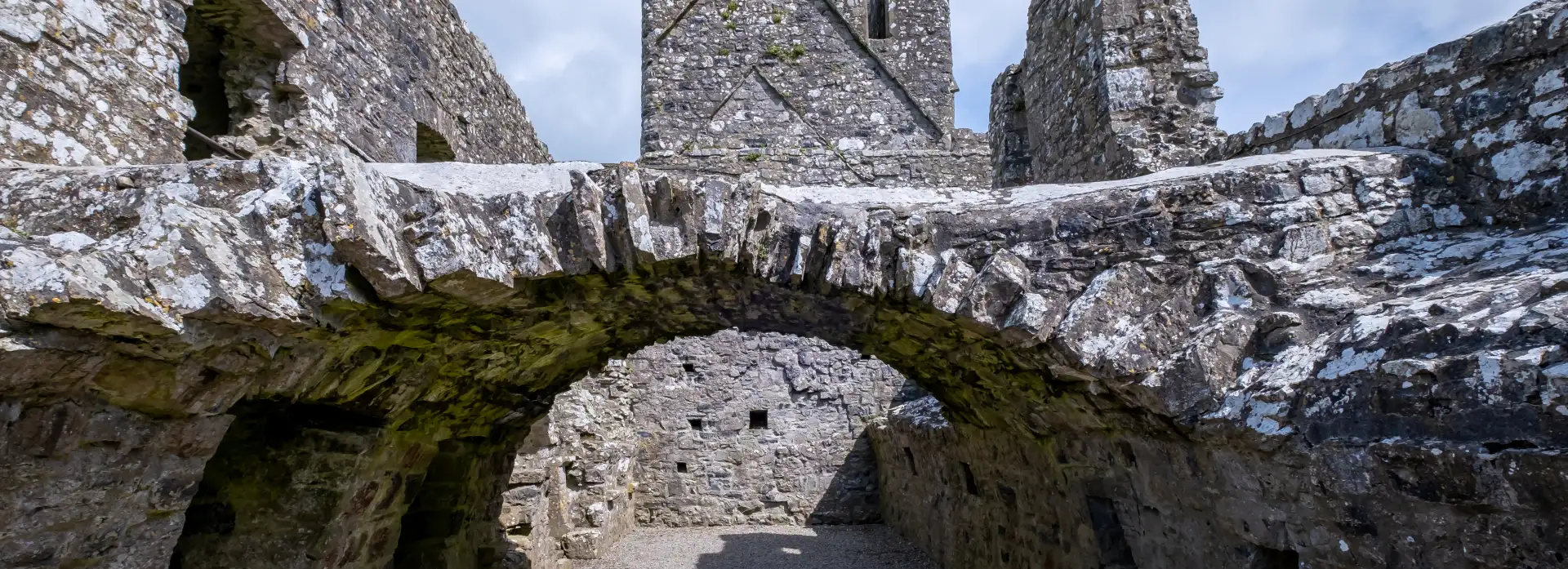
Around 630 AD, St. Féichín established the first foundations of Fore Abbey. Fore Abbey became a reputable sanctuary for prayer and leading a sustainable lifestyle. St. Féichín also gave rise to many of Fore’s ‘Seven Wonders’, making it a place of divine miracles & legends.

Brother Seamus, at your service, chemist by calling, distiller by divine inspiration.
God’s grace upon you, travelers! In the 12th century, Fore Abbey thrived as a Benedictine Priory, where we monks perfected uisce beatha — the water of life that would lay the foundations of Irish whiskey. Come, follow me through these sacred halls and taste a sip of heaven’s craft...
12th Century AD
Benedictine Monks at Fore Abbey
In the late 12th Century, Hugh de Lacy established Fore Abbey as a Benedictine Priory dedicated to St. Féichín. The Benedictine Monks led a life of heavenly devotion and craft being amongst those responsible for introducing Uisce Beatha - the foundations for Poitín & Whiskey to Ireland.

Seven Wonders of Fore
1. Monastery built upon the bog
The abbey at Fore first built in the 7th century is said to stand on bogland. The soft terrain on which the stone monastery was built, and upon which its ruins still stand today is nothing short of a miracle.

Greetings, scholars and seekers. I am Brother Niall, humble servant of wisdom and the written word.
Step lightly, seekers of tales, and follow Brother Niall on a journey through legend. From 15th Century folklore of the Children of Lir soaring above Lough Derravaragh to the 16th Century Statute of Galway, which sought to control uisce beatha, the lands bear the cultural roots of poitín as an illicit, rebellious spirit that endured through the ages....
15th Century AD
Children of Lir at Local Lough Derravaragh
Above Fore Abbey according to local 15th Century folklore, four swans would soar the heavenly skies. This is the legend of King Lir’s four children, who were cursed by their jealous stepmother to live as swans for 900 years. They spent 300 years on the nearby Lough Derravaragh in the hinterlands of Fore. Eventually, they regained human form but aged rapidly, symbolizing resilience and the fleeting nature of time. Their tale is a poignant reminder of love, loss, and endurance in Irish mythology.
16th Century AD
The Statute of Galway
In 1556 one of the first laws to regulate spirit production in Ireland, it restricted distilling uisce beatha (whiskey) to Galway’s “gentlemen” and freemen. This was meant to control quality and limit public drunkenness, but it pushed ordinary people to continue distilling in secret. Its legacy is significant because it marks the start of regulated spirit production in Ireland and the cultural roots of poitín as an illicit, rebellious tradition that survived for centuries.
Seven Wonders of Fore
2. The mill without a race
Referring to the 7th century mill beside Fore Abbey, this mill was able to function even though there was no visible water channel ("race") bringing water to it. Legend says that St. Féichín struck the ground with his crozier and water began to flow through the ground to power the mill.
Brother Seamus, at your service, chemist by calling, distiller by divine inspiration.
Step with me into the 17th Century AD, where the Benedictine monks of Fore first crafted Uisce Beatha, their secret recipes spreading across Ireland. In 1608, King James I granted Sir Thomas Phillips the first legal whiskey licence, and from these humble beginnings, the golden legacy of Irish whiskey began....
17th Century AD
First legal whiskey licence in Ireland
From the Benedictine monks of Fore introducing Uisce Beatha, their recipes were replicated across Ireland. In the year 1608, the first legal whiskey licence was granted to Sir Thomas Phillips in County Antrim by King James I. This licence allowed Phillips to distill whiskey in the area around Bushmills, County Antrim; these licences then began to spread amongst Irish distilleries.
Seven Wonders of Fore
3. The water that flows uphill
As water began to flow through the ground at Fore when St. Féichín struck the ground with his crozier, the water began to flow uphill to the mill.
Brother Seamus, at your service, chemist by calling, distiller by divine inspiration.
Brother Seamus will take you on a journey into the 17th Century AD, where the sacred roots of Uisce Beatha gave rise to Irish Poitín. Although made in monasteries for medicinal purposes, it soon found its way into hidden stills across Ireland. By 1661, poitín was outlawed, yet its rebellious spirit endured....
17th Century AD
Irish Poitín Outlawed
Derived from the same roots of Uisce Beatha, this moment marks a significant split between whiskey & poitín. Although made in Monasteries in Ireland and used for its medicinal purposes, Irish Poitín entered into a turbulent Journey. As time progressed and people discovered intoxicating effects of alcohol, individuals began to home distill the spirit in small pots, giving rise to poitín. Due to its unregulated production and the government’s desire to impose taxes on spirits, poitín was first illegalised in 1661. A symbol of Irish defiance and tradition, people continued to produce poitín to keep the craft alive.
Seven Wonders of Fore
4. The water that won’t boil
At the holy well at Tobernacogany: legend depicts the water to “not boil” and those who attempt to boil the holy well water should bring a terrible fate amongst themselves.
Greetings, scholars and seekers. I am Brother Niall, humble servant of wisdom and the written word.
Join me on a journey from the 18th Century AD, when the first shipments of Caribbean rum arrived at Ireland’s bustling ports of Dublin and Cork, bringing new ideas and inspirations for distillation, to the 19th Century, where Irish whiskey reached the height of global fame before facing decline through war, Prohibition, and trade disputes — a sweeping tale of trade, craft, and the enduring spirit of Ireland....
18th Century AD
Rum imported to Ireland
Alongside growing interest in the craft of distilling whiskey & poitín, Irish trade with Caribbean sugar colonies began to grow. With what is known as the introduction of transatlantic trade, Ireland began to import products such as rum into Irish ports. Dublin & Cork’s ports were key ports active in this transatlantic trade and gave rise to further education on various distillation methods seen in international spirit crafting.
18th - 19th Century AD
The Rise and Fall of Irish Whiskey
Large commercial distilleries in Dublin, Cork, and Ulster, aided by the 1823 Excise Act, made Irish whiskey a major export. By the mid-19th century it dominated global markets, boosted further by the Phylloxera crisis affecting brandy in France, but declined by the late 19th–early 20th centuries due to war, Prohibition, and trade disputes.
Seven Wonders of Fore
5. The tree that won’t burn
At the holy well of Tobernacogany in Fore, there was an ash tree with three branches; pilgrims would drive a coin into the bark. The tree (or its successor) is said to be such that wood from it will not burn.
Peace to you, wanderers. I am Brother Ronan, sworn guardian of this sacred ground.
Step with me into the 20th Century AD, where Irish Poitín began a remarkable new chapter in its long and storied journey. Across Ireland, whispers of its return stirred curiosity and excitement, hinting at a spirit rich in heritage, craft, and the enduring heart of the land — a tale of tradition and mastery waiting to be discovered by those willing to follow its path....
20th Century AD
Irish Poitín legalised
Irish Poitín was relegalised in 1997 when the Irish government lifted its centuries-old ban, recognising its cultural significance, heritage, and potential as a unique Irish spirit. Regulations were introduced to ensure safe and controlled production, allowing licensed distillers to produce poitín for domestic and export markets. This move transformed poitín from an illicit tradition to a celebrated craft spirit.
Seven Wonders of Fore
6. The lintel raised by St. Féichín’s prayers
Beside the Anchorite’s Cell lies St. Féichín’s church. According to legend, when this church was being built, no amount of men could raise the large lintel stone above the doorway. Through the power of prayer, it is said St. Féichín raised the stone into position.
Seven Wonders of Fore
7. The anchorite in a stone (cell)
The anchorite’s (hermit’s) cell is a small tower-house structure above the churches at Fore. Hermits would live in this cell with the promise to devote their life to god, never to leave the cell and would rely on locals to bring them supplies. The last known hermit, Patrick Belgan, lived here in the 17th Century. The structure includes a mausoleum to the Nugent family added in the 19th century.
Greetings, scholars and seekers. I am Brother Niall, humble servant of wisdom and the written word.
Step with us through time, guided by the monks of Fore - from Brother Niall with his tales of legends, to Brother Seamus and the fiery journey of Uisce Beatha and Poitín, to Brother Ronan witnessing the revival of craft in modern days. In the 21st Century AD, Irish spirits stand victorious. Distilleries like Fore, founded as recently as 2021, rise boldly to carry forward centuries of tradition & resilience....
21st Century AD
Irish Spirits Victory
Following Irish whiskey export domination in the mid 19th Century and fall in the 20th Century due to prohibition, Irish spirits have remained resilient! Despite current pressures, distilleries like Fore Distillery, established as recent as 2021, continue to rise in keeping Irish spirit craft alive. Learning from past battles, the Irish spirit market is courageous and determined to thrive!